Once
more Monday is in our lives, and on this day it's
bringing us ever closer
to the end of June--please don't ask me where this
month has gone, for I have
absolutely no idea at all. It's on its way
out, and to me, it seems that it's just
started! In any case, please end your month well and begin
your new one even better!
What we hold in our hearts for others is the way
we'll act toward them. A hard heart makes
for hard judgments; a compassionate heart
understands the humanity of the one we presume
to judge.
Compassion for the other comes out of our
ability to accept ourselves. Until we
realize both our own weaknesses and our own
privileges, we can never tolerate lack of status
and depth of weakness in the other.
The self-righteous hate themselves for their own
weaknesses and so they despise them in
others. That's why those who claim to be
virtuous fall so much further, so much harder,
than others when they fall. A touch of
compassion for others along the way would surely
soften the fall, as fall we shall--sooner or
later.
Compassion is the ability to understand how
difficult it is for people to be the best of
what they want to be at all times.
Life buffets us at our best. That's why
the hand of one who understands our efforts, our
errors, becomes the bridge that carries us over
the failures of life. . . .
"My feeling is that there is nothing in
life but refraining from hurting others, and
confronting those that are sad," Olive
Schreiner wrote. The idea deserves
thought. Imagine a world where
"rugged individualism" and
"natural corrections in the market
place" gave way to "refraining from
hurting the others and comforting those who are
sad." National compassion would
surely mean no more street people. No more
children with nowhere to go. No more
hungry people in the richest country in the
world. More welfare for the poor as well
as for the rich.
Compassion is the virtue that opens heaven to
us. It is what makes us most like
God. Everyone suffers in life.
Compassion is that quality in another that makes
it possible for us to survive it.
Compassion makes no distinction between friends
and enemies, neighbors and outsiders,
compatriots and foreigners. Compassion is
the gate to human community.
Compassion is not sympathy. Compassion is
mercy. It is a commitment to take
responsibility for the suffering of others. . .
.
It's one thing to do good; it's another thing to
be good. It's possible, perhaps, to do
good simply out of principle, but it's
impossible to really be good that way--not
if goodness is a quality of the heart and not
simply an exercise of the will.
We
have some
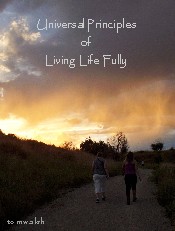
inspiring and motivational books that may interest you. Our main way of supporting this site is
through the sale of books, either physical copies
or digital copies for your Amazon Kindle (including the
online reader). All of the money that we earn
through them comes back to the site
in one way or another. Just click on the picture
to the left to visit our page of books, both fiction and
non-fiction!
4.To
love the fields and the wild flowers, the stars,
the far-open sea, the soft, warm earth, and to
live much with them alone; but to love
struggling and weary men and women and every
pulsing, living creature better.
OUR complex modern life, especially in our
larger centers, gets us running so many times
into grooves that we are prone to miss, and
sometimes for long periods, the all-round,
completer life. We are led at times almost to
forget that the stars come nightly to the sky,
or even that there is a sky; that there are
hedgerows and groves where the birds are always
singing and where we can lie on our backs and
watch the treetops swaying above us and the
clouds floating by an hour or hours at a time;
where one can live with his soul or, as Whitman
has put it, where one can loaf and invite his
soul.
We need
changes from the duties and the cares of our
accustomed everyday life. They are necessary for
healthy, normal living.We need occasionally to be away from our
friends, our relatives, from the members of our
immediate households. Such changes are good for
us; they are good for them.We appreciate them better, they us, when
we are away from them for a period, or they from
us.
We need these changes occasionally in order to
find new relations—this in a twofold sense.By such changes there come to our minds
more clearly the better qualities of those with
whom we are in constant association; we lose
sight of the little frictions and irritations
that arise; we see how we can be more
considerate, appreciative, kind.
In one of those valuable essays of Prentice
Mulford entitled ''Who Are Our Relations?"
he points us to the fact, and with so much
insight and common sense, that our relations are
not always or necessarily those related to us by
blood ties, those of our immediate households,
but those most nearly allied to us in mind and
in spirit, many times those we have never seen,
but that we shall sometime, somewhere be drawn
to through the ceaselessly working Law of
Attraction, whose basis is that like attracts
like.And
so in staying too closely with the accustomed
relations we may miss the knowledge and the
companionship of those equally or even more
closely related.
We need these changes to get the kinks out of
our minds, our nerves, our muscles—the cobwebs
off our faces.We need them to whet again the edge of
appetite.We
need them to invite the mind and the soul to new
possibilities and powers.We need them in order to come back with
new implements, or with implements redressed,
sharpened, for the daily duties.It is like the chopper working too long
with axe unground.There comes the time when an hour at the
stone will give it such persuasive power that he
can chop and cord in the day what he otherwise
would in two or more, and with far greater ease
and satisfaction.
We need periods of being by ourselves—alone.Sometimes a fortnight or even a week will
do wonders for one, unless he or she has drawn
too heavily upon the account.The simple custom, moreover, of taking an
hour, or even a half hour, alone in the quiet,
in the midst of the daily routine of life, would
be the source of inestimable gain for countless
numbers.
If such changes can be in closer contact with
the fields and with the flowers that are in
them, the stars and the sea that lies open
beneath them, the woods and the wild things that
are of them, one cannot help but find himself
growing in love for and an ever fuller
appreciation of these, and being at the same
time so remade and unfolded that his love, his
care, and his consideration for all mankind and
for every living creature, will be the greater.
Living
Life Fully, the e-zine
exists to try to provide for visitors of the world wide web a
place
of growth, peace, inspiration, and encouragement. Our
articles
are presented as thoughts of the authors--by no means do
we
mean to present them as ways that anyone has to live
life. Take
from them what you will, and disagree with
whatever you disagree
with--just know that they'll be here for you
each week.
We in the West don't think much in terms of balance,
and
obviously
we should. Even the very thought of an
exquisite union and
balance
of all our forces, both
physical and mental, has a gentle, hopeful
ring
to it. . . . All of us must find a bridge between our
physical and
spiritual
parts. When that balance is
achieved, what a happy comfort
for ourselves!
Edward J. Lavin
You
Never Know When Something Will Happen
An
important lesson of life was just repeated to me
yesterday when I was out running. I was on a
beautiful rail-to-trail path in New Hampshire for
the third day in a row (we're visiting family here),
enjoying the morning and the forest, when all of a
sudden, from one step to the other, I started
feeling a lot of pain in my right calf.
Nothing changed in my stride, I wasn't trying to
avoid rocks or other obstacles, I didn't stop and
then start, and I had stretched that muscle plenty
before the run. It just happened. One
moment I was running fine and enjoying myself, the
next I was forced to walk and turn around and head
home.
I've learned that these kinds of moments come when
they will, no matter what we may do to try to avoid
them. We can be as careful as we'd like and
take all the precautions available to us, and
they're still going to happen. I do know that
when we take precautions and are careful, the
chances are much less likely that something
bad will happen, but we rarely can guarantee that
the chances are zero. At best we can minimize
the chances of disaster or pain or injury, but we
almost never can eliminate the chances completely.
I can do everything within my power to avoid getting
a virus, yet still catch it. I can baby-proof
my house to the best of my ability, and a baby still
may find a way to hurt themselves. I can plan
out my vacation to the nth degree, yet still run
into an unforeseen snag that turns it into an ordeal
for me. Life happens--it's as simple as
that. And we're fooling ourselves if we think
that we're in charge of what life does, or that
we're able to control life to such a degree that we
never have to face any challenges or obstacles.
This is why when someone says that they did all that
they could to avoid something, I believe them.
They may be exaggerating or not telling the truth,
but that's not for me to determine. I know
that life is going to go ahead and do its thing no
matter what we do to try to avoid problems.
You might have done everything you needed to do to
maintain your car, and it still broke down, yet
there are many people who will tell you that
"there must have been something that you didn't
do." We like to judge other people,
especially when it appears that we have evidence
upon which we can judge them harshly, so we jump on
that evidence and make our criticisms based on what
we think it means--and we're often very, very wrong.
I've also learned not to try to second-guess how
these moments happen. I have a pulled muscle
in my calf, and it hurts a bit. But there was
nothing I could have done--short of not running at
all--to avoid it. I did do everything I could
have and should have done. I stretched before
I ran, I was running at a pace that was easy for me,
I was on a decent, level trail. I don't blame
myself for it at all--it's just one of those things
that happen now and again. I'm not going to
blame myself for the injury. I am going to
deal with it as best as I can and do all that I can
to allow it to heal, but blame isn't part of this
picture.
Blaming myself would just add insult to injury,
literally. It would add stress that I don't
deserve to my life, and it would make me feel bad
about something that I don't need to feel bad
about. I can accept the injury, but I don't
have to assign blame for it. The injury has
happened, and now I'm involved in trying to allow
the injury to heal, and that's the most important
thing for me to focus on now. I'm going to
take advantage of the fact that I can't run for a
few days (I hope it's that short of a time) and use
the time that I would have spent running for other
things that are also productive or fun or
both. Life has given me a forced rest here,
and it's up to me to make it into something
positive--and to make sure that I actually do rest.
And that's the lesson as far as it concerns
me. But as I've already mentioned, it's
important that I remember this when I'm dealing with
others who have had something bad happen, yet who
claim to have done all they could to avoid it.
It's important that I give them the benefit of the
doubt and keep in mind that it's very likely that
what they're saying is true--they might truly have
done all they could to avoid problems, yet still
have the problems show up in their lives. It's
not for me to judge whether they were negligent or
careless--especially when I've seen in my own life
just how quickly things can change for the
worse. Yes, they can also change for the
better, but they don't always do that, do
they? And some things actually do just
happen--they're no one's fault, and no one's
responsibility. We just have to deal with them
for what they are, here and now.
Of course, understanding the causes of certain
things can be very beneficial, especially if we want
to avoid repeats. If I hadn't stretched at all
before running, I could learn that I'd better
stretch if I don't want to have this problem
again. If I don't change the oil in my car for
two years and the engine seizes, then I've learned a
valuable lesson about changing oil. But not
everything has a clearly defined cause, and some
things really do just happen. When they do, we
simply need to deal with them for what they are and
stop worrying about how they came about.
A child is
entitled to sane messages
from adults. How parents
and
teachers
talk to children will help them to know
how
they should
feel about themselves. Their statements affect
the child's
self-esteem and self-worth. To a
large extent,
their
language
determines the child's destiny.
Haim Ginott
How many of us get up in the morning feeling truly
grateful for the day? Most of us wish we could turn the
clock back and keep sleeping. The truth is, when you are
happy to wake up and are grateful for the day, your life does
change.
Each new day is an opportunity to pray for your loved
ones and to act in a loving manner towards them. I start out
by saying my prayer of thanks and asking for guidance and help
from all available resources. I find I am always grateful
for the new day, no matter how hard it is or will be, because I
know I am not ready for my days to end. After all, the
alternative to waking up and facing another difficult day is
death. For all I know, after death the unenlightened may be
sent back to wake up to the glory of the new day and its
opportunities.
I want to experience more days and the difficulties
and opportunities they will bring. I want the chance to test
myself. Maybe this makes me a glutton for punishment, but if
I can help one living thing get through the day and not hurt
anyone else in the process, I go to sleep thankful for the time I
have been given and eager to awaken to tomorrow.
Be understanding to your enemies.
Be loyal to your friends.
Be strong enough to face the world each day.
Be weak enough to know you cannot do everything alone.
Be generous to those who need your help.
Be frugal with what you need yourself.
Be wise enough to know that you do not know everything.
Be foolish enough to believe in miracles.
Be willing to share your joys.
Be willing to share the sorrows of others.
Be a leader when you see a path others have missed.
Be a follower when you are shrouded by the mists of
uncertainty.
Be the first to congratulate an opponent who succeeds.
Be the last to criticize a colleague who fails.
Be sure where your next step will fall, so that you will not
tumble.
Be sure of your final destination, in case you are going the
wrong way.
Be loving to those who love you.
Be loving to those who do not love you, and they may change.
Above all, be yourself.
unattributed
When
an almond tree became covered with blossoms in the heart
of winter, all the trees around it began to jeer. "What vanity,"
they screamed, "what insolence! Just think, it believes it can
bring
spring in this way!" The flowers of the almond tree
blushed for
shame. "Forgive me, my sisters," said the tree. "I
swear I did not want
to blossom, but suddenly I felt a warm springtime breeze in my
heart.”
Yes, life
can be mysterious and confusing--but there's much of life that's
actually rather dependable and reliable. Some principles apply
to life in so many different contexts that they can truly be called
universal--and learning what they are and how to approach them and use
them can teach us some of the most important lessons that we've ever
learned.
My doctorate is in Teaching and Learning. I use it a lot when I
teach at school, but I also do my best to apply what I've learned to
the life I'm living, and to observe how others live their lives.
What makes them happy or unhappy, stressed or peaceful, selfish or
generous, compassionate or arrogant? In this book, I've done my
best to pass on to you what I've learned from people in my life,
writers whose works I've read, and stories that I've heard.
Perhaps these principles can be a positive part of your life, too! Universal Principles of Living Life Fully. Awareness of
these principles can explain a lot and take much of the frustration
out of the lives we lead.
Explore all of our
quotations pages--these links will take you to the first page of each
topic, and those pages will contain links to any additional pages on
the same topic (there are five pages on adversity, for example).





 ™
™